Summary: How CNC Machining Quotes Are Calculated: Breaking Down Programming Fees, Machine Hourly Rates, and Material Costs
A CNC machining quote is typically composed of material costs, programming fees, machine hourly rates, fixturing/tooling costs, inspection fees, surface treatment expenses, subcontracting/outsourcing fees, and overhead. The cost breakdown varies significantly depending on the part; therefore, it cannot be accurately estimated based solely on weight or dimensions.
For standard plate parts, material costs often represent a larger share. Conversely, for complex cavities, thin-wall parts, multi-hole patterns, and 5-axis components, machine hourly rates and programming fees will be substantially higher. High-precision parts requiring a Coordinate Measuring Machine (CMM), full-dimensional reports, or custom inspection fixtures will also see a noticeable increase in inspection costs.
When quoting low-volume custom parts, justway typically breaks the cost down into material, manufacturing process, fixturing, inspection, and surface treatment. This transparency ensures clients understand exactly where their money is going, rather than receiving a vague lump sum.
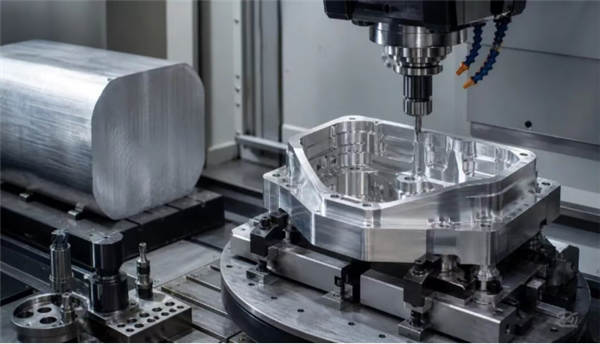
Figure 1: Industrial scene featuring CNC machined aluminum alloy cavity parts
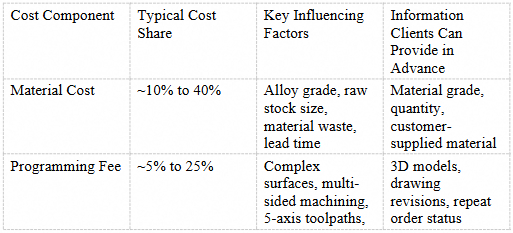
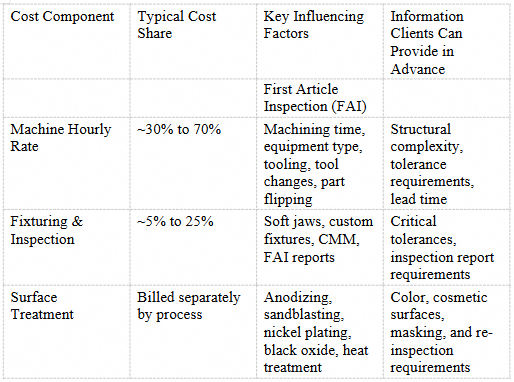
These percentages are general reference ranges. The cost structure for single-piece prototyping, low-volume repeat orders, complex 5-axis parts, and standard 3-axis parts will differ entirely.
Material costs encompass raw stock procurement, cutting, material waste, and inventory risk. The unit prices for aluminum alloys (6061, 7075), stainless steel, copper, PEEK, and titanium vary significantly. The further the raw stock size is from the final part dimensions, the higher the material waste.
However, in CNC machining, expensive materials are not the sole driver of a high quote. A small, complex cavity may use inexpensive material but require extensive machining time. Conversely, a large, simple plate may have a prominent material cost but low machining difficulty.
If clients can provide the material grade, quantity, and whether alternative materials are acceptable, machine shops can assess material costs and lead times much faster. justway also provides material substitution suggestions when they do not compromise functionality.
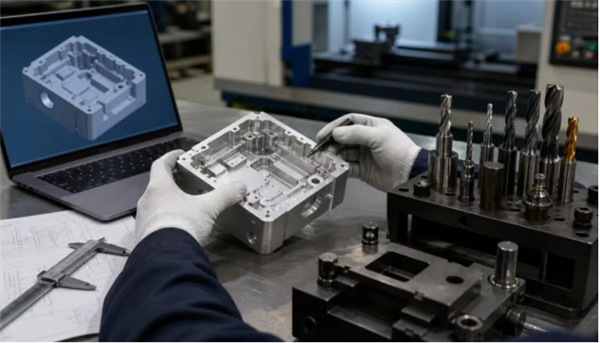
Figure 2: Industrial scene featuring CNC machined aluminum alloy cavity parts
Programming fees primarily cover toolpath planning, fixturing strategies, simulation, post-processing, and First Article Inspection (FAI) verification. While simple flat plates with holes require minimal programming time, complex surfaces, 5-axis simultaneous machining, multi-angle holes, deep cavities, and thin-wall parts demand significantly more engineering judgment.
The machine hourly rate reflects the actual machine occupancy time. Cutting time, tool changes, workpiece alignment, part flipping, in-process measurement, rework allowance, and FAI setup all factor into the actual cost. 5-axis equipment typically carries a higher hourly rate than standard 3-axis machines, but if it reduces multiple setups, the total cost may not be higher.
Therefore, parts made of the same material and dimensions can have vastly different quotes depending on structural complexity. A truly reasonable quote should be able to explain the manufacturing process, rather than simply applying a multiplier based on weight.
If a part only requires standard dimensional checks, inspection costs are relatively low. However, if CMM reports, full-dimensional reports, position, flatness, coaxiality tolerances, or post-treatment re-inspections are required, inspection time will increase significantly.
Surface treatment similarly impacts the quote. Anodizing, sandblasting, hardcoat anodizing, nickel plating, black oxide, passivation, and heat treatment may involve subcontracting lead times, masking, re-inspection, and cosmetic risks. Whether dimensions need to be re-inspected after surface treatment also affects the overall cost.
justway generally advises clients to specify all surface treatment and inspection requirements upfront before quoting. Adding these requirements later often necessitates a complete re-evaluation of both the quote and the lead time.
In one instance involving a CNC machined aluminum alloy cavity, a client felt the initial quote from justway was too high. Instead of simply lowering the price, Justway broke the cost down into seven specific components: 7075 material, 5-axis programming, two setups, thin-wall finishing, CMM reporting, and outsourced black anodizing.
Through communication, it became clear that the client’s critical requirements were strictly limited to four locating holes and one sealing surface, while cosmetic requirements for certain deep cavities could be relaxed. Justway adjusted the toolpaths and inspection plan, removing the standard inner cavity from the high-precision tolerance scope while maintaining ±0.01mm control on the critical holes.
The final quote aligned much closer to the client’s budget, and the First Article Inspection (FAI) passed smoothly. Through this process breakdown, the client didn’t simply haggle; they understood exactly which costs could be optimized and which were non-negotiable.
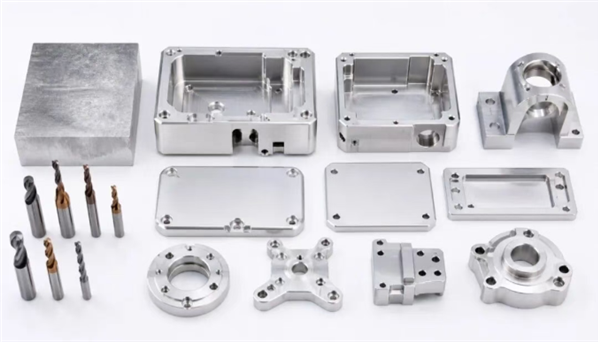
Figure 3: Industrial scene featuring CNC machined aluminum alloy cavity parts
For procurement and R&D professionals, choosing a CNC machining partner that can transparently explain their quote structure is far more reliable than simply selecting the lowest unit price. Justway’s advantage lies in our ability to clearly articulate the manufacturing logic behind every quote.
• Misconception 1: Estimating CNC prices based on material weight. Complex parts are typically expensive due to machining time and fixturing/inspection requirements, not material mass.
• Misconception 2: Viewing programming fees as unnecessary overhead. For low-volume custom parts, programming and FAI verification directly determine whether the part is manufactured correctly the first time.
• Misconception 3: Adding surface treatment and inspection requirements after the fact. Late additions fundamentally alter costs, lead times, and acceptance criteria.
Quotes generally include material costs, programming fees, machine hourly rates, fixturing/tooling, inspection fees, surface treatment, and subcontracting/outsourcing overhead.
Custom parts require dedicated toolpath planning, fixturing strategies, simulation, and FAI verification. Complex parts significantly increase engineering and programming time.
It is the actual machine occupancy cost, factoring in cutting time, tool changes, workpiece alignment, part flipping, and FAI setup.
Differences in structural complexity, material, precision tolerances, number of setups, inspection requirements, and surface treatments all drive price variations.
Yes. Justway can break down quotes by material, manufacturing process, machine hours, inspection, and surface treatment to help clients accurately identify cost drivers.
CNC machining quotes are typically composed of material costs, programming fees, machine hourly rates, fixturing/tooling, inspection fees, and surface treatment expenses. The cost distribution varies significantly depending on the part. Complex cavities are not necessarily expensive due to material; thin-wall, high-precision parts often incur higher costs from fixturing, machining cycle times, and inspection. Justway is committed to breaking down the manufacturing logic behind every quote we provide.


