Help Center
Deliver to:
Ship to
Currency
USD (US Dollar)
Save
Your Cart
Your quote requests is empty.
Welcome back! If you had Quote requests items in your Shopping cart, we have saved them for you. You can Sign in now to see them, or whenever you're ready to check out.
Total $0.00
View Cart

Characteristics and Selection of Different Surface Rust Prevention Measures

Last updated on Jan 05, 2026

In the machinery industry, carbon steel and alloy steel are the most widely used materials, and components made from them usually require anti-corrosion treatment. In addition to conventional painting, there are many other surface treatment methods in practice, such as electrogalvanizing, hot-dip galvanizing, zinc diffusion coating, phosphating, black oxide coating, chrome plating, cadmium plating, nickel plating, Dacromet, and so on.


You may have heard of these methods, or even used them in practice. But what are their characteristics, and how should they be selected? Today, we’ll introduce them in one article—don’t forget to like and save it!


1. Black Oxide Coating and Phosphating (Worst Anti-Corrosion Effect)

Both methods share a key feature: the surface needs to be oiled after treatment, and this oil is crucial—they will rust quickly without it.

Due to their low cost, black oxide coating and phosphating are widely used. The neutral salt spray test (NSS test) duration for black oxide coating is only 3–5 hours, while phosphating can reach 10–20 hours. With high-grade rust-preventive oil (which is 2 to 3 times more expensive than ordinary phosphating oil), the duration can extend to 72–96 hours.


You might wonder what the NSS test duration indicates. The salt spray test is an environmental test that uses artificially simulated salt spray conditions created by test equipment to assess the corrosion resistance of products or metal materials. Compared with the natural environment, the chloride concentration in the simulated salt spray can be several times or even dozens of times higher, greatly accelerating the corrosion rate and shortening the test time. Remember: roughly 24 hours of neutral salt spray testing corresponds to 1 year in natural environments.


Phosphating can be further divided into subtypes based on the phosphating solution, such as common zinc phosphating and manganese phosphating:

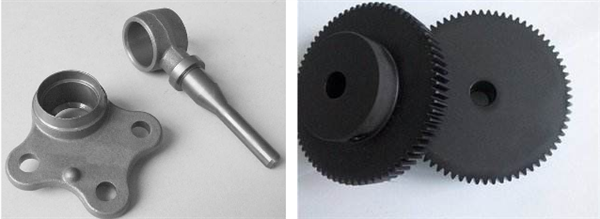
- **Manganese phosphating**: Generally used for wear-resistant and lubricating treatments. Its structure consists of spherical granular crystals with a dense film, making it the most effective among all phosphating types for rust prevention. However, it has poor adhesion to coatings, so it is rarely used as a pre-coating treatment. The film is highly rigid and unsuitable for extrusion processes.

- **Zinc phosphating**: Also used for rust prevention. Its structure is mainly acicular, flaky, or snowflake-like, and relatively loose, so it is widely used as a pre-coating treatment. Its rust prevention effect is significantly inferior to manganese phosphating. It is typically used for pre-coating preparation, rust prevention, and cold extrusion drawing.

2. Zinc-Based Coatings (Electrogalvanizing, Hot-Dip Galvanizing, Zinc Diffusion Coating, Dacromet)

Let’s move on to various zinc-based treatments: electrogalvanizing, hot-dip galvanizing, zinc diffusion coating, and Dacromet.


2.1 Electrogalvanizing

Electrogalvanizing is probably the most familiar to everyone. It is low-cost, and the surface of galvanized parts has a good appearance. However, its corrosion resistance is only moderate—though much better than black oxide coating and phosphating. The NSS test duration for ordinary electrogalvanizing is within 72 hours; with a special sealant (5 to 8 times more expensive than ordinary galvanizing), it can exceed 200 hours.

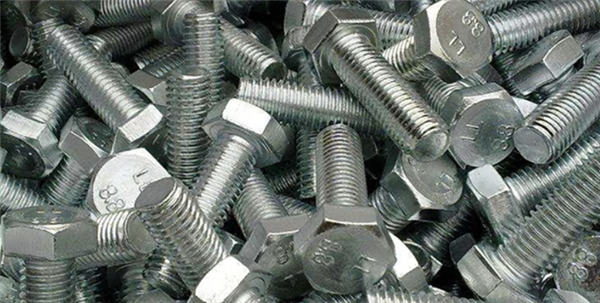
A well-known issue with electrogalvanizing is hydrogen embrittlement, so it is rarely used for high-strength components (such as bolts of grade 10.9 or higher). Although hydrogen removal via an oven is possible afterward, it increases costs, which most manufacturers are unwilling to bear. You might ask: how to treat high-strength fasteners? For a budget option, choose phosphating; for a high-end solution, go for Dacromet (introduced later).


2.2 Hot-Dip Galvanizing

Unlike electrogalvanizing (which relies on electrode reactions), hot-dip galvanizing involves immersing the workpiece in a zinc bath—its process involves intermetallic and physical reactions, so "hot-dip zinc coating" is a more accurate name. During hot-dip galvanizing, the workpiece surface forms a layer of intermetallic compounds followed by a zinc layer, while electrogalvanizing only produces a zinc layer with no intermediate layer.


Typically, electrogalvanized layers are thinner, while hot-dip galvanized layers are thicker, giving hot-dip galvanizing better corrosion resistance. However, the coating thickness is difficult to control, and the process causes severe pollution (including zinc waste and zinc vapor). With stricter environmental protection requirements, the use of hot-dip galvanizing has become increasingly limited.


2.3 Zinc Diffusion Coating

As the name "diffusion" suggests, its principle is similar to gear carburizing. It is a thermal diffusion surface strengthening technology—a chemical heat treatment process that prepares a Zn-Fe alloy protective layer by diffusing zinc into the surface of steel components under heating.


Zinc diffusion coating effectively improves the corrosion resistance, oxidation resistance, and wear resistance of steel surfaces. It has a uniform thickness, and its bonding strength with the substrate and corrosion resistance are the best among all zinc-based coatings (electrogalvanizing, hot-dip galvanizing, Dacromet). The process is pollution-free and environmentally friendly.


2.4 Dacromet

Dacromet is the transliteration and abbreviation of "DACROMET". It is a new generation of clean production technology internationally that replaces electrogalvanizing and hot-dip galvanizing. Its coating offers excellent corrosion resistance, low pollution, no pickling or rinsing, no hydrogen embrittlement, strong weather resistance, and compatibility with various metal substrates. It adopts electroplating principles but is applied via coating methods.


Dacromet’s corrosion resistance is far superior to electrogalvanizing. Under standard salt spray testing, Dacromet coating wears at a rate of 1μm per 100 hours, while electrogalvanized coating wears at 1μm per 10 hours. Therefore, with the same coating thickness, Dacromet’s salt spray resistance is 7 to 10 times that of electrogalvanizing.

3. Other Metal Coatings (Cadmium Plating, Chrome Plating, Nickel Plating)

Since zinc plating works for corrosion prevention, plating other rare metals should too—and that’s correct. There are also surface anti-corrosion methods like cadmium plating, chrome plating, and nickel plating. Let’s take a look at each:

3.1 Cadmium Plating

Cadmium coatings have excellent corrosion resistance, especially in marine atmospheric environments, outperforming other surface treatments. However, the waste liquid treatment process for cadmium electroplating is expensive, with costs about 15 to 20 times higher than electrogalvanizing. Therefore, it is not used in general industries, only in specific environments—such as fasteners for oil drilling platforms and naval aircraft.


3.2 Chrome Plating

Chrome coatings are very stable in the atmosphere, resistant to discoloration and dulling, with high hardness and good wear resistance. Chrome plating on fasteners is usually for decorative purposes and rarely used in industrial fields requiring high corrosion resistance—because high-quality chrome-plated fasteners are as expensive as stainless steel. Chrome-plated parts are only used when stainless steel lacks sufficient strength. To prevent corrosion, copper and nickel plating should be applied before chrome plating. Chrome coatings can withstand high temperatures up to 650°C but suffer from the same hydrogen embrittlement issue as electrogalvanizing.

3.3 Nickel Plating

Nickel plating refers to depositing a layer of nickel on metal or some non-metals via electrolytic or chemical methods. It is divided into electroplated nickel and electroless nickel plating. It is mainly used in applications requiring both corrosion resistance and good electrical conductivity—such as terminal posts for automotive batteries.