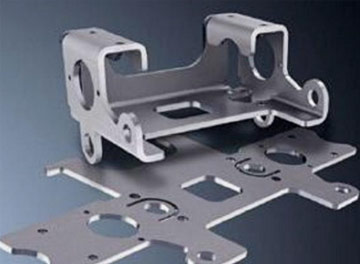
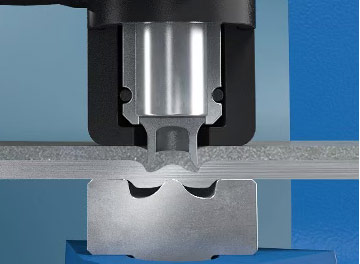
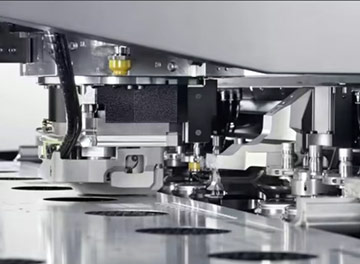
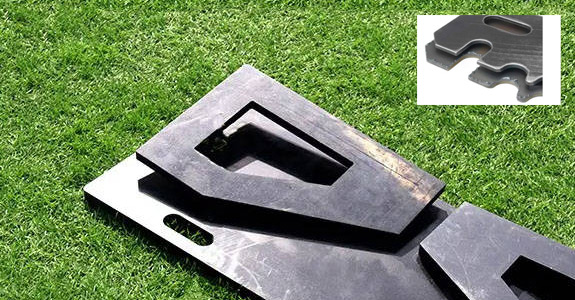
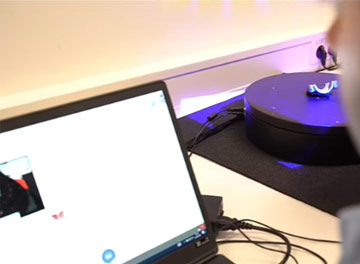
Sheet metal parts are well-suited for mass production, and the design quality of individual components exerts a significant impact on overall costs. The costs of sheet metal products mainly stem from ...
 Justway
Jun 11,2026
120 views
Justway
Jun 11,2026
120 views
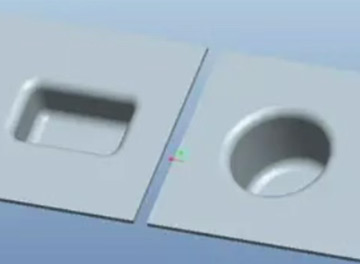
Flat panels are the most common feature of sheet metal parts. Flat components made of relatively soft and thin materials generally have low strength and are prone to deformation under load. The streng...
Justway
Jun 11,2026
112 views
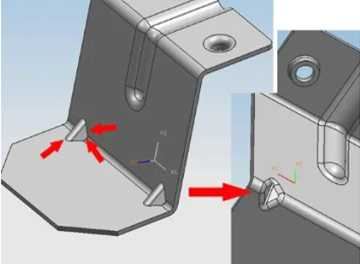
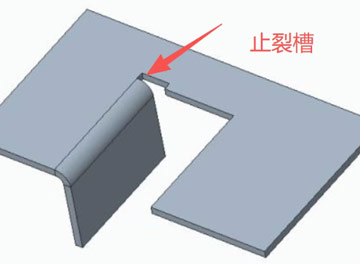
Relief NotchesRelief notches are commonly used in bending and embossing processes. They prevent the material from further deformation and cracking during forming or subsequent service, and can also re...
Justway
Jun 11,2026
179 views
Deep DrawingEmbossingDeep drawing is a stamping process that forms flat blanks into open hollow parts. It can also process prefabricated open hollow parts to reduce their diameter and increase depth t...
Justway
Jun 10,2026
239 views
V-die grooves in different sizes: V6-V40 MMBending is a key process in stamping. Its working principle is to apply external force to make metal materials produce plastic deformation, so as to form sha...
Justway
Jun 09,2026
103 views
Blanking is a stamping process that uses a blanking die to separate sheet metal under the pressure of a press machine. It is a general term for various separation processes including punching, blankin...
Justway
May 29,2026
430 views
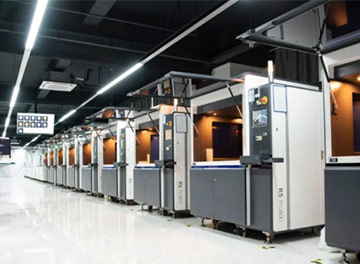
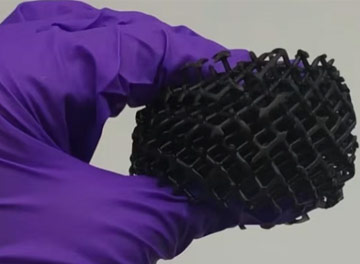
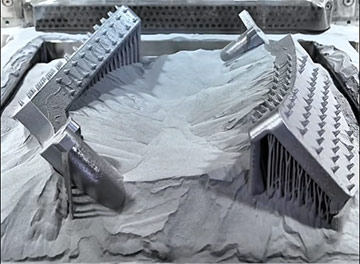
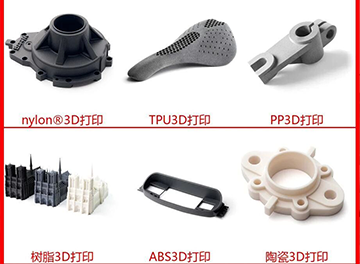
In May, Justway completed standardized training for nylon 3D printing production. Relying on professional delivery standards and high-capacity production capabilities, the company has established a ne...
Justway
May 22,2026
152 views
Sheet metal processing is a comprehensive cold working technique for thin metal sheets, covering blanking, bending, stretching, forming, forging and riveting. The biggest feature of sheet metal parts ...
Justway
May 21,2026
248 views
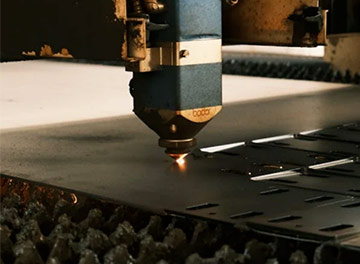
Laser cutting focuses a laser beam on the surface of a material through a focusing lens to melt, vaporize, and ablate the material. Simultaneously, compressed gas coaxial with the laser beam blows awa...
Justway
May 18,2026
164 views
In the fast-paced world of hardware development, the efficiency of the "Quote-to-Part" pipeline is as important as the quality of the part itself. At Justway, we believe that technical transparency—es...
Justway
Apr 24,2026
285 views
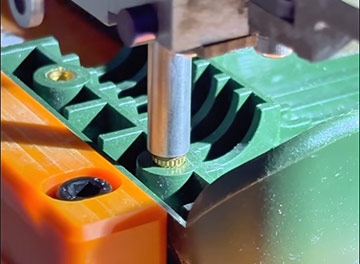
A 3D printed part often serves as a chassis for a larger mechanical system. Two critical factors determine its assembly success: the structural integrity of threaded inserts and the legibility of func...
Justway
Apr 23,2026
265 views
In industrial manufacturing, the "raw" 3D print is rarely the final stop. To meet aesthetic and functional requirements, parts often undergo painting, sanding, or dyeing. However, post-processing intr...
Justway
Apr 23,2026
275 views
In industrial applications, "quality" is measured by a part's performance under stress. Whether it is a load-bearing bracket, a high-temperature sensor housing, or a snap-fit enclosure, the material's...
Justway
Apr 23,2026
172 views
In industrial additive manufacturing, the transition from a digital CAD model to a physical part is governed by the laws of thermodynamics and laser optics. The two most persistent challenges for engi...
Justway
Apr 23,2026
189 views
A 3D printed part that "looks good" but fails to fit its mating component is a manufacturing failure. Achieving high-level assembly precision requires more than just high-end hardware; it requires a d...
Justway
Apr 23,2026
184 views
Visible textures are often dismissed as "standard," but at Justway, we treat them as variables to be controlled. This post breaks down the physics of surface artifacts and our proprietary mitigation s...
Justway
Apr 23,2026
161 views
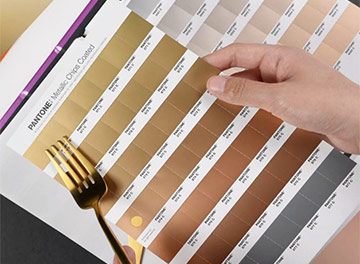
In many applications, the visual quality of a 3D printed part is as critical as its mechanical function. However, achieving consistent color and a premium surface finish requires rigorous control over...
Justway
Apr 22,2026
176 views
Selecting the right material is only half the battle in 3D printing. Understanding how that material behaves during the layering process—and recognizing the natural physical traits of additive manufac...
Justway
Apr 22,2026
149 views
Technical Analysis:"Accuracy" is a variable, not a constant. At Justway, we distinguish between theoretical machine resolutions and real-world industrial tolerances.1. Process Logic: Matching Physics ...
Justway
Apr 21,2026
347 views
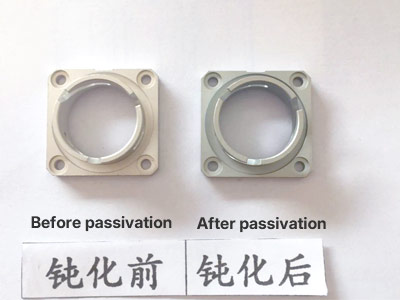
When it comes to making and using stainless steel liquid cooling connectors, pipelines, or structural parts, there’s one question that keeps coming up over and over: “We definitely did passivation, so...
Justway
Apr 13,2026
302 views
| Ranking | Name | Answers |
|---|